
Examples of effective activities that increase biodiversity in European countries
Published on: June 3, 2025
Across Europe, countries are stepping up with innovative and diverse approaches to enhance biodiversity and promote sustainable ecosystems. From legislative reforms and digital tools to incentive-based programmes and participatory frameworks, these initiatives reflect a growing commitment to environmental stewardship.
Whether it’s rewilding farmland, integrating green infrastructure into urban planning or mandating biodiversity net gain in development projects, governments are increasingly aligning policy with ecological priorities. This article highlights a range of effective biodiversity-enhancing activities across European nations, showcasing both localised and nationwide strategies that aim to restore habitats, protect species and ensure resilient nature-rich landscapes for future generations.
Innovative approaches for enhancing biodiversity in Europe
Norway’s digital mapping services for environmental data
Norway has developed open-access digital mapping services through collaboration among governmental stakeholders. These platforms offer a wide range of map layers across various themes, including environmental data on habitats, land resources, species, geology, and landscapes, enhancing biodiversity efforts.
UK’s biodiversity net gain approach in development projects
The UK has implemented a pioneering approach in the biodiversity offsetting market by requiring a minimum 10% Biodiversity Net Gain (BNG) for most developments requiring planning permission in England, promoting biodiversity.

Netherlands’ nature-inclusive design for urban planning
In the Netherlands, nature-inclusive design is mandatory in many municipalities. To secure building permits, development projects must earn sufficient nature points through measures such as green roofs, wildlife provisions, ponds, and flower-rich vegetation, contributing to biodiversity.
Belgium’s participatory framework for urban nature projects
In Belgium, the Flemish Agency for Nature and Forestry is piloting a new policy framework emphasising the government’s facilitating role in promoting participatory and democratic values, aiming to foster local ownership of urban nature projects, enhancing biodiversity.
Finland’s environmental offsetting and nature credit system
In Finland, the Nature Conservation Act allows for environmental offsetting. Efforts are underway to further develop and define a voluntary nature credit system and market, supporting biodiversity.
Sweden’s ecosystem services in planning processes
Swedish municipalities are being supported in integrating ecosystem services and green infrastructure into planning processes, guided by a national Guidance for Green Planning framework to create sustainable living environments and enhance biodiversity.
Denmark’s green transition agreement for land conversion
The Danish government has signed a green transition agreement aiming to convert approximately 400,000 hectares of farmland into wetlands and forests – equivalent to about 10% of Denmark’s total land area, boosting biodiversity.
Germany’s updated national biodiversity strategy
Germany updated its National Biodiversity Strategy and Action Plan (NBSAP) in 2024 and has allocated €4 billion through 2026 to implement the plan, which includes restoring a broad range of ecosystems, promoting biodiversity.
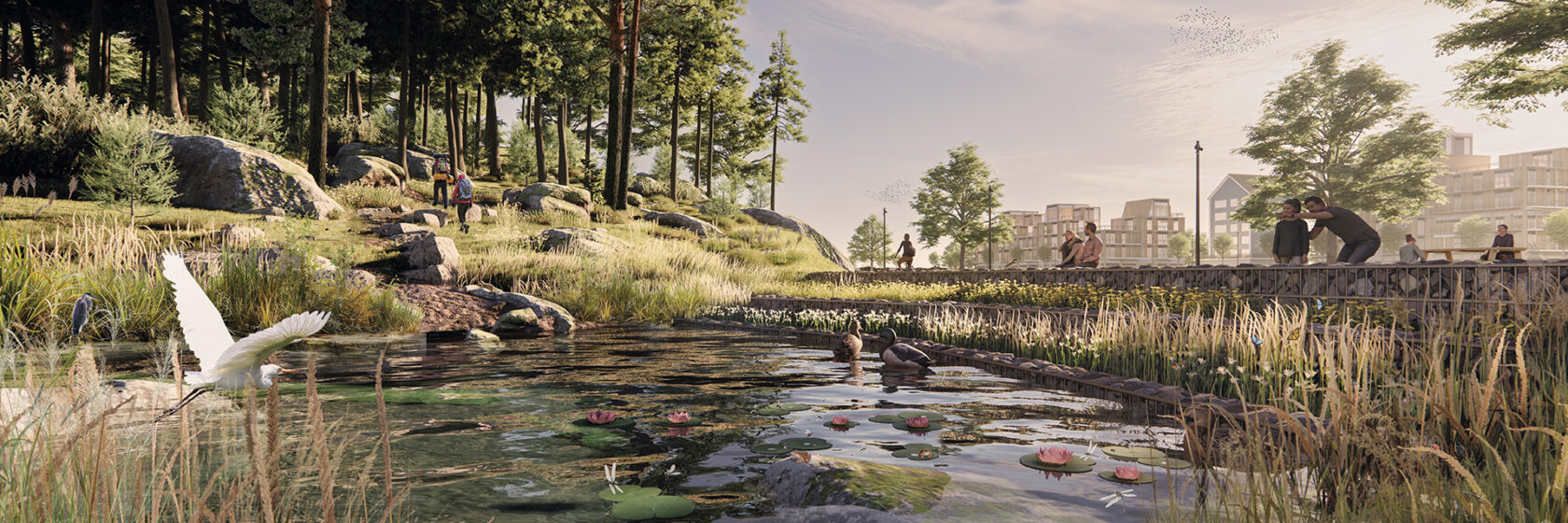
Explore our latest Urban Insight report: Five key trends driving Europe’s biodiversity agenda

How circularity builds industrial resilience
Discover how circular economy principles strengthen industrial resilience, reduce waste and secure sustainable growth in a changing world. Read more

Meet Sweco at the IWA World Water Congress & Exhibition in Glasgow
Our experts will share our knowledge and showcase potential solutions for more resilient, secure and sustainable water systems. Read more

Sweco’s role in Europe’s state-of-the-art hospital projects
Explore how Sweco’s multidisciplinary expertise is helping deliver some of Europe’s most advanced hospital projects Read more

Planning cooler cities for a warmer future
Discover how heatwaves and heat mapping help European cities plan cooler, healthier and more resilient urban environments. Read more

Making knowledge easier to access with Sweco’s Expert Chat
Discover Expert Chat, Sweco’s secure AI assistant that makes complex project documents easier to search and use. Read more

Managing heatwaves in European cities: Strategies and solutions
As cities across Europe grapple with the intensifying impacts of climate change, managing heatwaves has become a crucial concern. Urban areas are facing severe heat effects, including the Urban Heat Island (UHI) effect, which significantly raises temperatures compared to surrounding areas. Read more
