
Seven steps to protect Europe’s vital infrastructure
Learn seven steps to protect Europe's vital infrastructure against climate change and build resilience. Read more
Do you ever imagine what the urban areas of the future will look like? We do no different. Every day. This is what we would like to share with you. How we design and develop this city together with our clients. Stories about great collaborations, cases, ideas and solutions. We like to inspire you with our stories, columns and news items.
Learn seven steps to protect Europe's vital infrastructure against climate change and build resilience. Read more

A recent Sweco study predicts that European cities will experience an increase in both the number of heatwave days per year and the maximum temperatures during these events. These extreme heat events pose significant risks to public health, energy infrastructure and economic productivity in urban areas. Read more

Critical infrastructure failures resulting from rainfall-induced floods pose substantial risks to society, public health, economies and the environment. Recent heavy flooding in Europe proves that rainfall can shut down cities, leading to enormous damage and costs. Read more

The impacts of heatwaves are already being felt worldwide. Between 2013 and 2022, the number of heatwave days increased by 94 per cent globally compared to the period from 1986 to 2005. Read more

Industrial symbiosis is created by using waste from one operation as a resource in another operation and is a subset of the circular economy. It is a method for increasing industrial circularity by promoting transactions of information and residues to provide economic and environmental synergies in a network of industry actors. Read more

Europe, the continent where warming is accelerating at the most alarming rate, faces a critical challenge: urban heatwave adaptation. A new Sweco study highlights this critical issue, revealing that European cities are struggling to keep pace with adaptation measures for the escalating heatwaves. Read more

Transport CO2 emissions grew by 1.7% annually from 1990 to 2022 and must decrease by over 3% per year by 2030 to meet Net-Zero Emissions by 2050. Achieving this requires strong regulations, financial incentives, and investments in electric vehicles, power-to-X technologies, and biofuels. Read more

The steel industry has taken a leading role in the industrial sector’s green transition by leveraging smart manufacturing and green technology. Several startups have emerged in the steel sector, taking advantage of the green transition and the opportunity to build from scratch. Read more

The global energy sector is undergoing a profound transformation as it shifts towards renewable energy sources like solar and wind. This transition is essential for mitigating climate change and ensuring a sustainable energy future. Read more
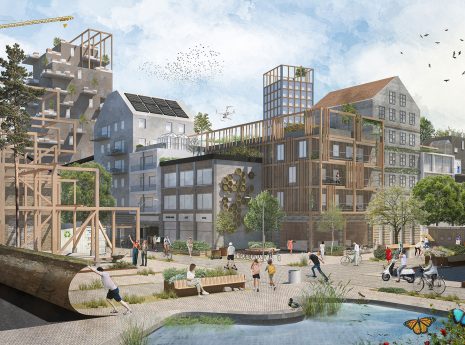
Mapping of circular urban economy cases across Europe –results webinar 4th of June, 2024. Delve into best-practice cases of circular urban economies in Europe. Read more