Taking on Europe’s water challenges
Europe’s water resources are under increasing pressure. Sweco’s Urban Insight report presents six concrete actions and best practice case studies demonstrating how Europe can strengthen its water systems to address challenges of flooding, water scarcity, and pollution.
Across the continent, access to clean, safe water has long been taken for granted. Turning on the tap and expecting high-quality water has been a cornerstone of public health, economic development and social stability. For decades, Europe’s water services have been among the continent’s great infrastructure successes. Today, that assumption is increasingly being challenged.
The European Environment Agency (EEA) reports that 32% of Europe’s groundwater is under pressure from diffuse pollution.
Climate change, ageing infrastructure, rising demand and contaminants such as pharmaceuticals and PFAS – the so-called ‘forever chemicals’ – are putting unprecedented pressure on drinking water and wastewater systems.
Why source to tap – and back to nature – matters
Prolonged droughts, record breaking heatwaves and changing rainfall patterns are turning water scarcity from an exception into a recurring reality. While floods dominate headlines, a silent crisis of scarcity is unfolding. Water stress affects roughly 20% of Europe’s territory and 30% of its population annually.
Around 65% of Europe’s drinking water is supplied by groundwater. In several countries, these resources are under increasing pressure from the use of pesticides, nitrate pollution and insufficient protection of recharge areas. At the same time, emerging micropollutants – including PFAS, pharmaceuticals and industrial chemicals – have now been detected in most water bodies and are difficult and costly to remove.
As a result, only a minority of Europe’s surface waters and groundwater bodies currently achieve good ecological or chemical status, underscoring the scale of the pollution challenge.
increase in water costs for micropollutant removal in European household wastewater.
of groundwater under pressure from diffuse pollution in Europe.
of Europes drinking water is supplied by groundwater.
Water costs and investment gaps – increasing costs for water treatment
Across Europe, household water use and pricing show wide disparities, reflecting differences in infrastructure, consumption habits and local policy.
Water use and prices also vary widely. Average household consumption is 125 litres per person per day. Water prices range from about €1.2 per cubic metre in Bulgaria to €9.3 in Denmark, with a European average of around €3.6 per cubic metre.
Despite these differences, investments in water efficiency and infrastructure remain insufficient, especially in countries with lower tariffs.
Sweco’s analysis shows that current water prices in many countries cover only a fraction of the long-term costs required for infrastructure renewal, climate adaptation and advanced treatment of micropollutants.
According to Sweco, implementing quaternary treatment as part of advanced wastewater treatment could increase domestic water costs by around 6%, while broader environmental and societal impacts remain largely unaccounted for.
“The true cost of water extends far beyond the water bill, encompassing economic, environmental, social and climate-related costs borne by society and nature,”
says Mattias Salomonsson, Water Expert at Sweco.

Solutions and six key actions for water resilience
Recognising the real, long-term cost of water is essential – not to make it more expensive, but to ensure robust, resilient systems capable of delivering safe water for generations. Sweco’s experts highlight both practical projects and the following six recommended actions:
1. Make water risk assessments a standard requirement – for spatial plans, permits, infrastructure projects and financing decisions.
2. Develop municipal water strategies with clear risk analyses for drinking water, wastewater, stormwater and flooding, with contingency plans.
3. Plan and finance the renewal of ageing infrastructure – prioritising critical assets and securing long-term budgets for PFAS treatment and system upgrades.
4. Conduct regular water risk and resilience assessments – linking maintenance and investment to risk analysis and reducing non-revenue water.
5. Integrate water risk into credit, investment and insurance decisions – ensuring water-intensive sectors and municipalities account for deferred maintenance and exposure to droughts or floods.
6. Use land-use planning and nature-based solutions to reduce risks – protecting recharge zones, avoiding high-risk development and creating urban spaces that store and infiltrate water.

Water projects in action: Fixing Europe’s water systems
Europe’s water challenges are real. Europe’s drinking water and wastewater systems are under increasing pressure from climate extremes, rising demand, pollution and aging infrastructure.
Despite these challenges, proven solutions already exist. Circular water systems, advanced treatment technologies and integrated water management are strengthening resilience across Europe through measures such as rainwater utilisation, upgraded wastewater treatment to address micropollutants and wastewater reuse.
The report highlights a range of best practice projects to strengthen water systems across Europe. Here are a few examples:
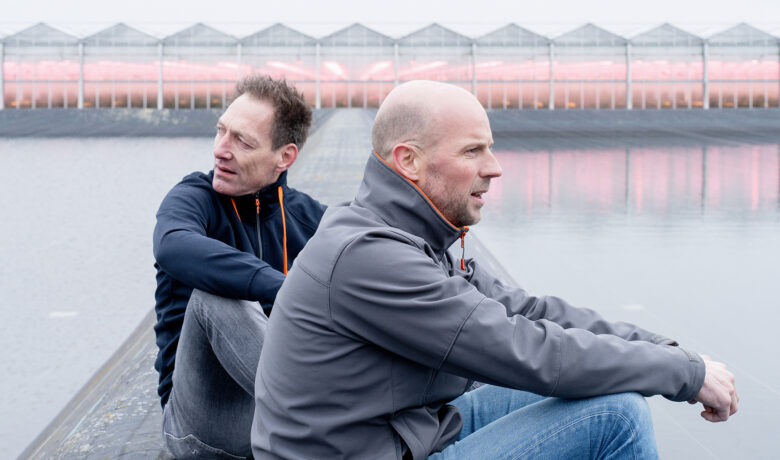
Waterbank Agriport, Netherlands – Circular rainwater storage
An innovative system storing rainwater from greenhouse roofs and data centres underground for irrigation and cooling, reducing dependence on drinking water.
Circular rainwater storage for drought resilience and reduced drinking water use, the Netherlands At Agriport A7 in Middenmeer, the Netherlands, ECW Energy and Sweco have developed Waterbank Agriport, an innovative rainwater capture, storage and recovery system that strengthens drought resilience, reduces drinking water demand and secures business continuity.
Data centres contribute large volumes of high‑quality rainwater through roof runoff and require reliable cooling water supplies, while greenhouse growers need substantial volumes of irrigation water during dry periods. By linking complementary water needs and supplies, the Waterbank creates a local circular water system that reduces dependence on drinking water.
Jersey, UK – Strategic plan for resilient water management
Integrating rainwater use and wastewater reuse to increase island resilience against drought and climate change.
Being an island in the English channel, the water situation is always challenged by the laws of nature. Proactive planning and preparedness is of highest priority.
Sweco has been commissioned by the government of Jersey to produce the ‘Bridging Liquid Waste Strategy’ report. It describes, among other things, how the use of rainwater, as well as the reuse of wastewater, can increase resilience and robustness against drought and climate change in the future.
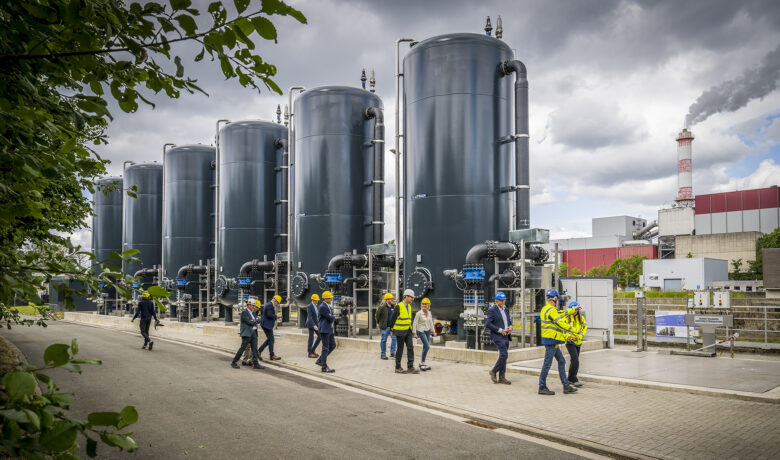
Aartselaar WWTP, Flanders, Belgium – Quaternary treatment of micropollutants
Full-scale plant removing pharmaceuticals, pesticides, hormone-disrupting compounds and PFAS from wastewater, enabling future water reuse and strengthening local water quality.
Flanders has launched its first full‑scale quaternary treatment installation, marking a breakthrough in removing persistent s such as pharmaceuticals, pesticides, hormonedisrupting compounds and PFAS from wastewater. At Aquafin’s WWTP located in Aartselaar, the new line combines disc filtration, high‑capacity ozonation and granular activated carbon filtration to treat up to 1,200 m³ of effluent per hour. (Image by Frederik Beyens – Aquafin).
The project strengthens local water quality—par‑ ticularly in the Grote Struisbeek—and provides essential insights for future applications across Flanders and beyond. This higher‑quality effluent also paves the way for broader water reuse opportunities in the future
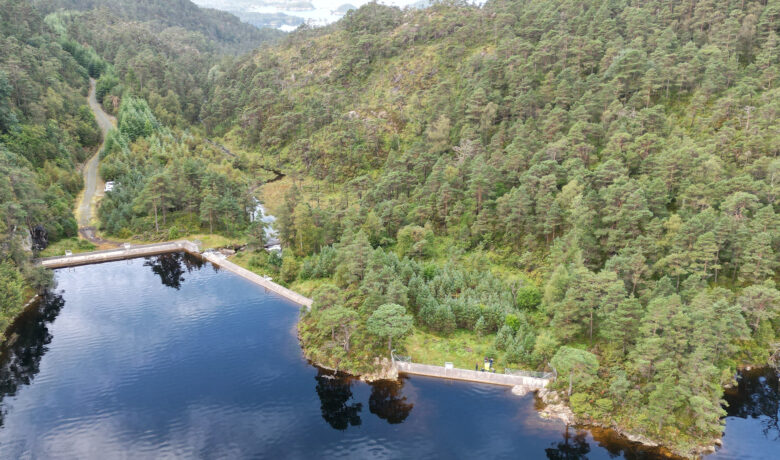
Bergen, Norway – Dam safety and flood reassessment
Sweco reassesses dams and flood conditions in two key catchments that supply drinking water to Bergen. The project safeguards drinking water infrastructure and strengthens long‑term resilience.
Flood calculations were updated, dam safety reassessments were conducted, and hydrographic investigations were carried out. The work includes technical follow‑up of concrete and masonry dams and coordination of sampling and contractor activities.
Together with clients and partners, Sweco contributes to the planning and design of resilient water systems, drawing on innovative treatment, reuse and circular solutions to help protect water supply, ecosystems and public health.
What is needed to secure resilient water systems for people, nature and future communities?
Read the latest Urban Insight report to explore approaches for clean water and resilient water systems across Europe.