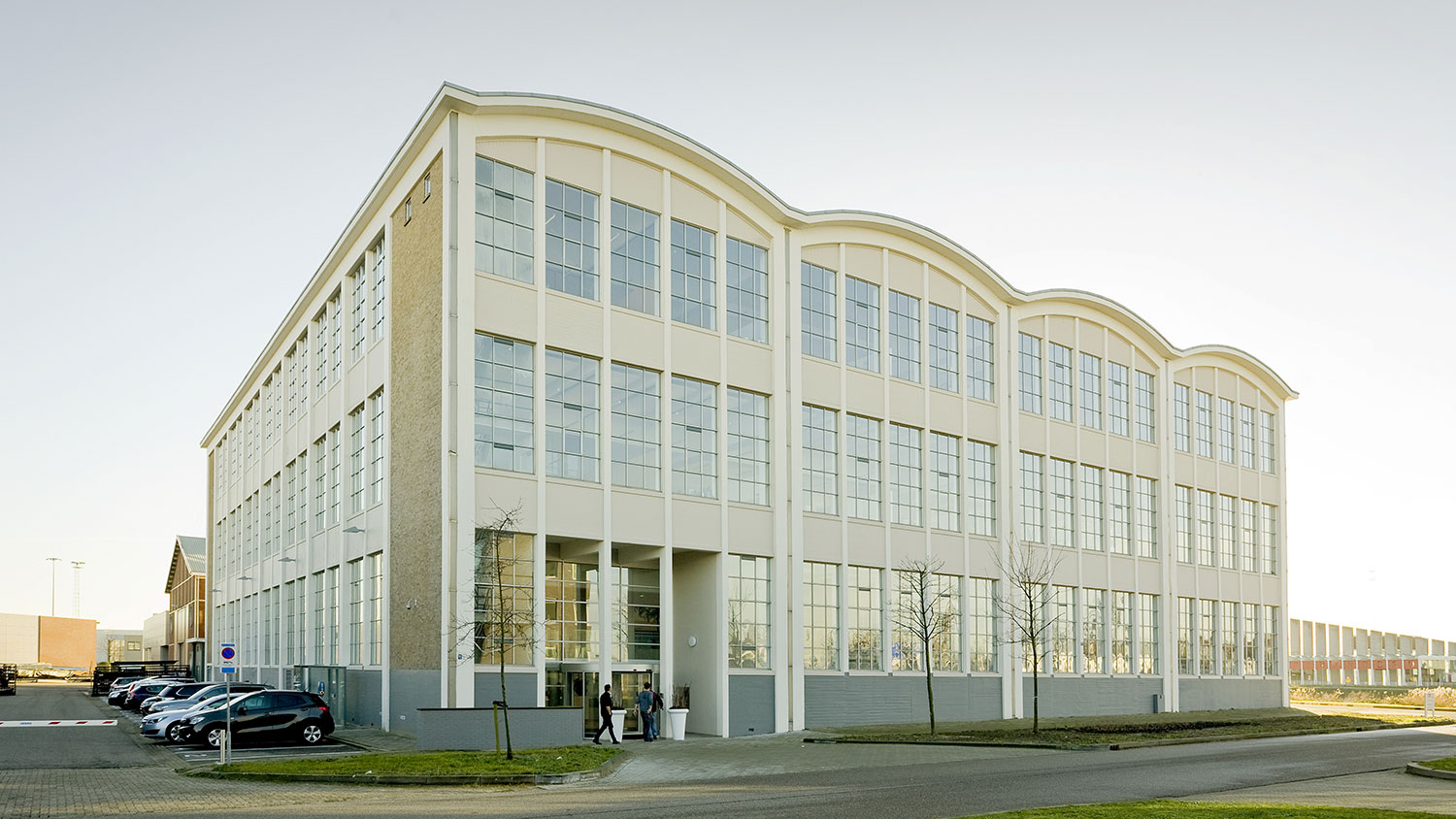
Impressive transformation of a former ship carpentry building in the Netherlands
The Timmerfabriek
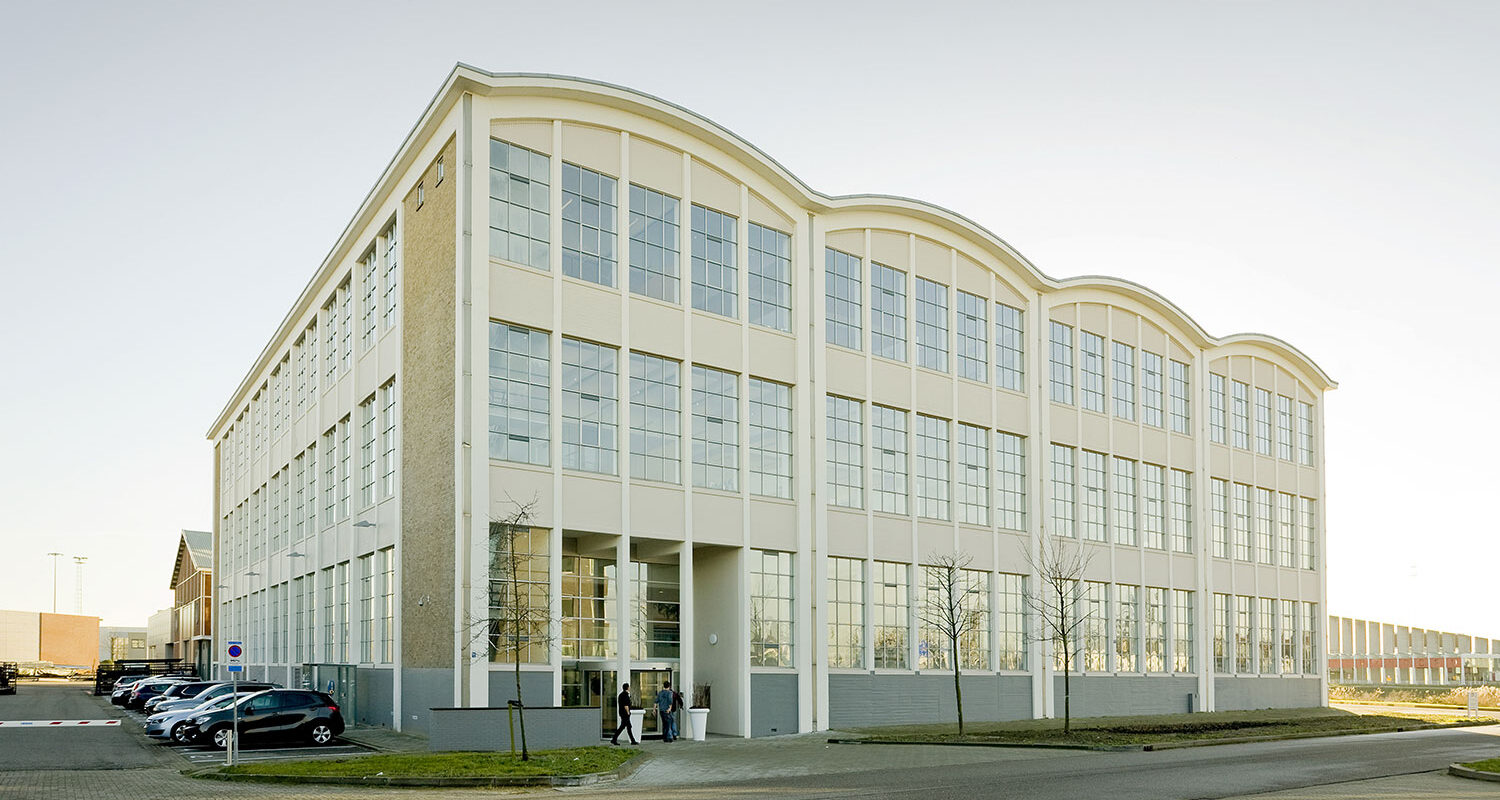
An industrial building for ship carpentry from 1948 has been transformed into a high-quality modern office environment while preserving and restoring the original open character.
Facts about the project
Client
Gusto MSC
Place
Schiedam, the Netherlands
Contractor
ABT, Tempel Bouw & Ontwikkeling
Status:
Completed
Size:
9 500 sqm
Photographer:
Marcel van der Burg
Close Collaboration in building transformation
The offshore engineering firm GustoMSC has moved into the Timmerfabriek, an industrial building full of character, on the former site of the Wilton Fijenoord shipyard in the Dutch city Schiedam. Sweco’s architects, in close collaboration with GustoMSC and ABT, have designed the transformation of the building covering approximately 9,500 sqm, meeting the needs of the new occupant and the prerequisites of the existing structure.
An industrial building with character
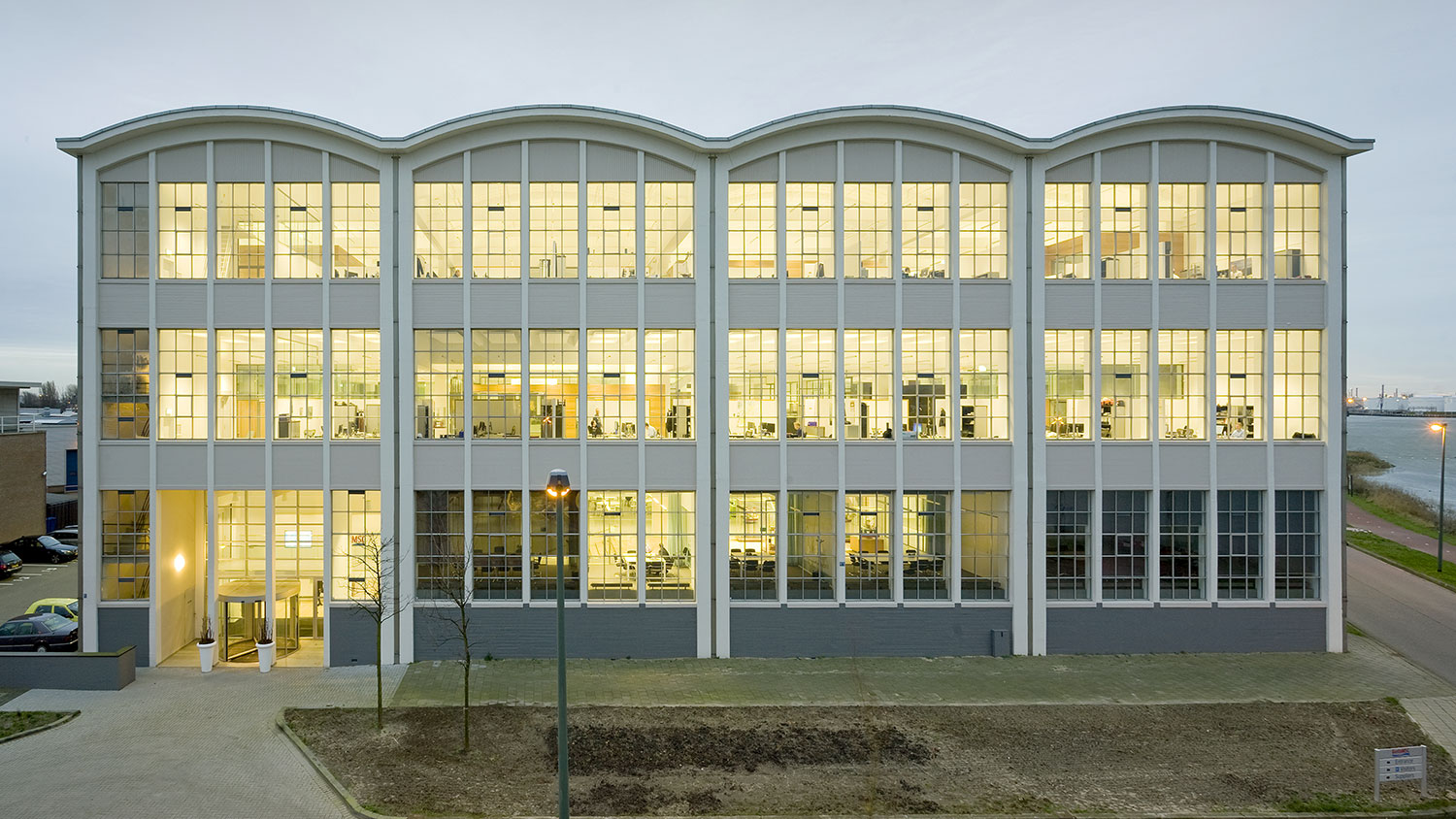
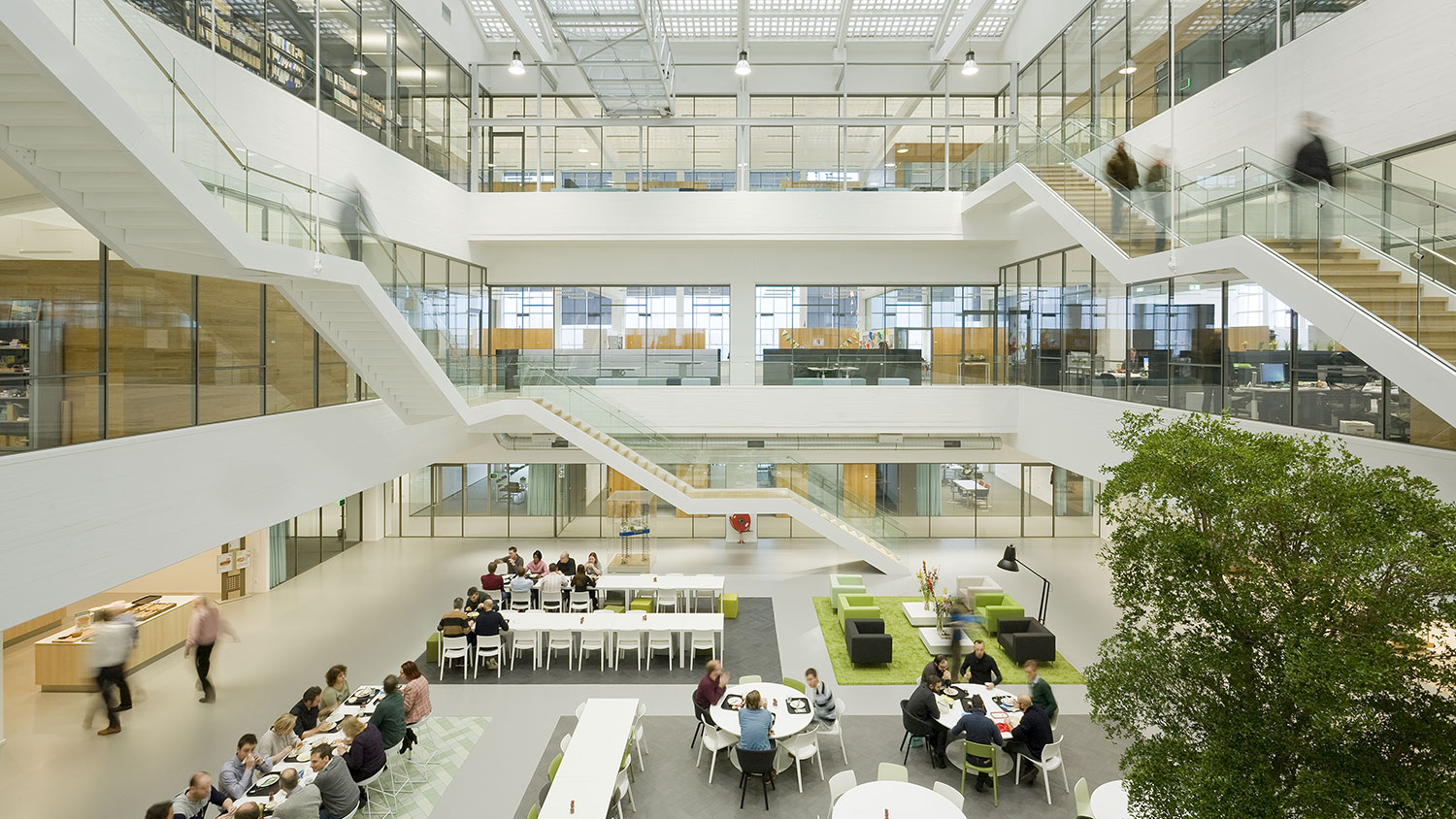
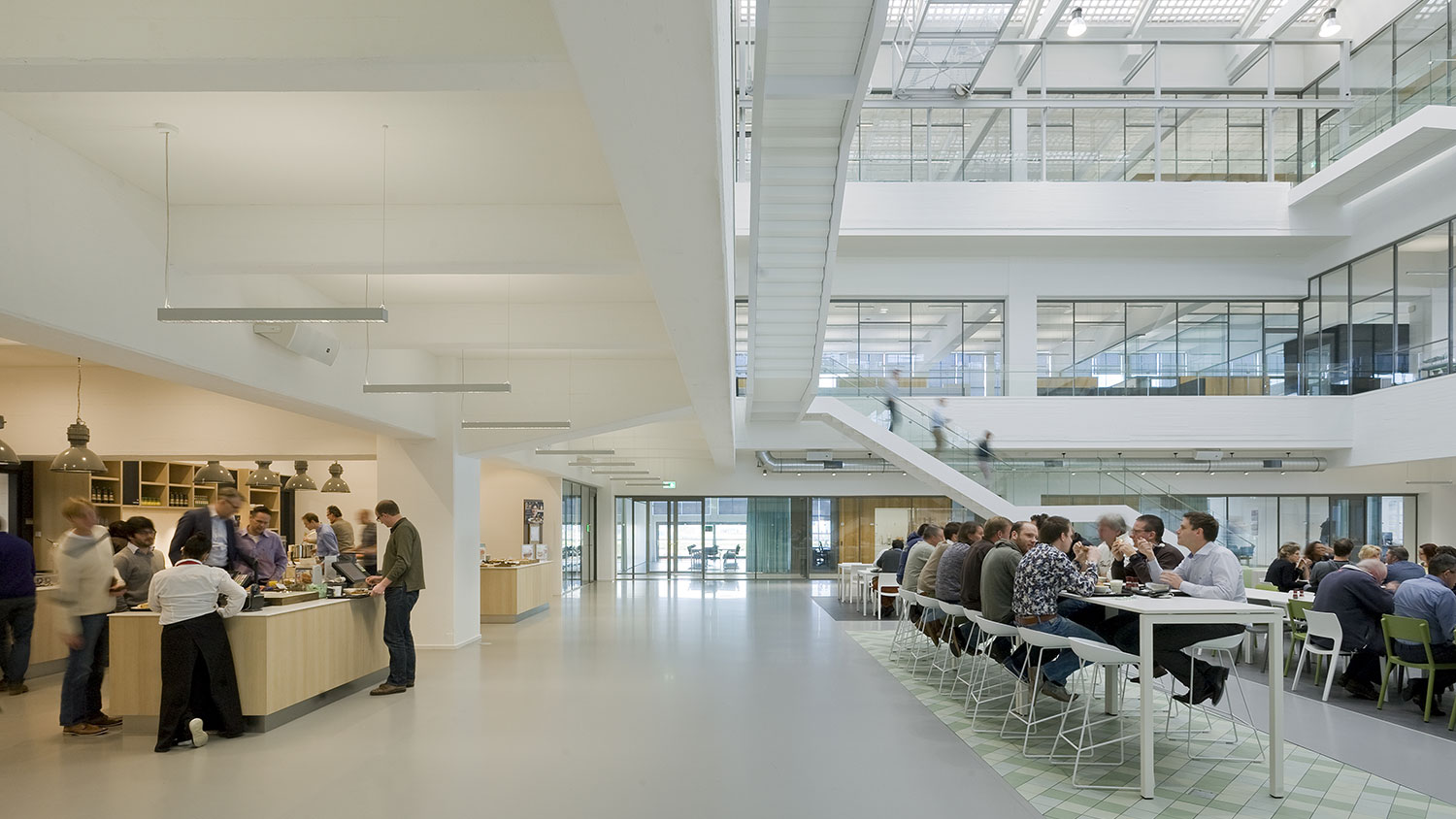
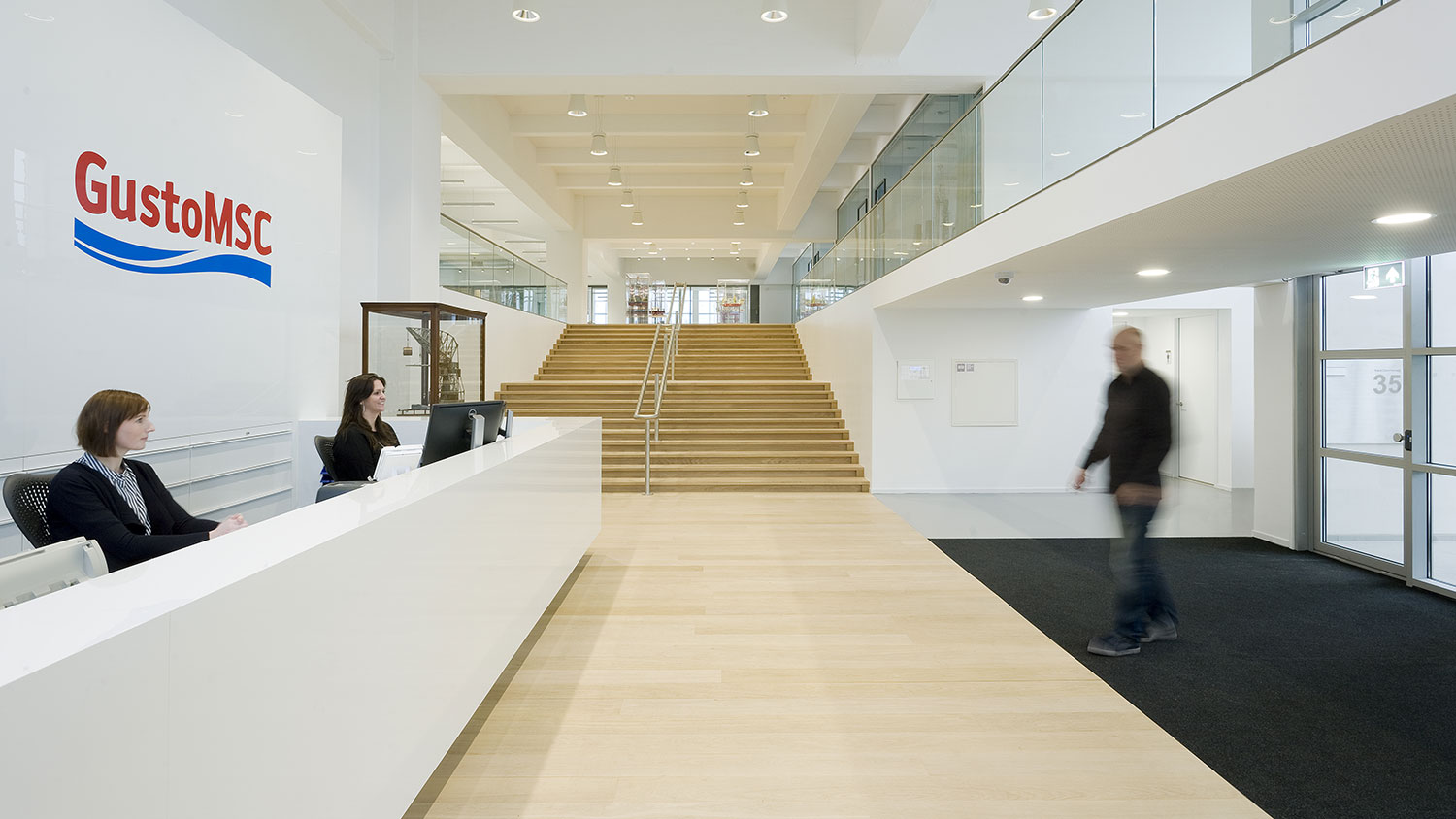
The Timmerfabriek is a former three-story ship carpentry workshop now characterised by large open floors around a central atrium, a minimum floor height of five metres, and large glass surfaces in the facade that provide light and space. The expressive structure of the building, with a footprint of 50×50 metres, is made entirely of concrete and its shell roof adds to the distinct character. Authentic details such as the industrial maintenance bridges, the skillfully executed concrete stairs, and the skylights made of glass bricks in the atrium further emphasise the sober yet graceful transformation architecture and the industrial history of the building.
Redevelopment focused on preservation and modern use
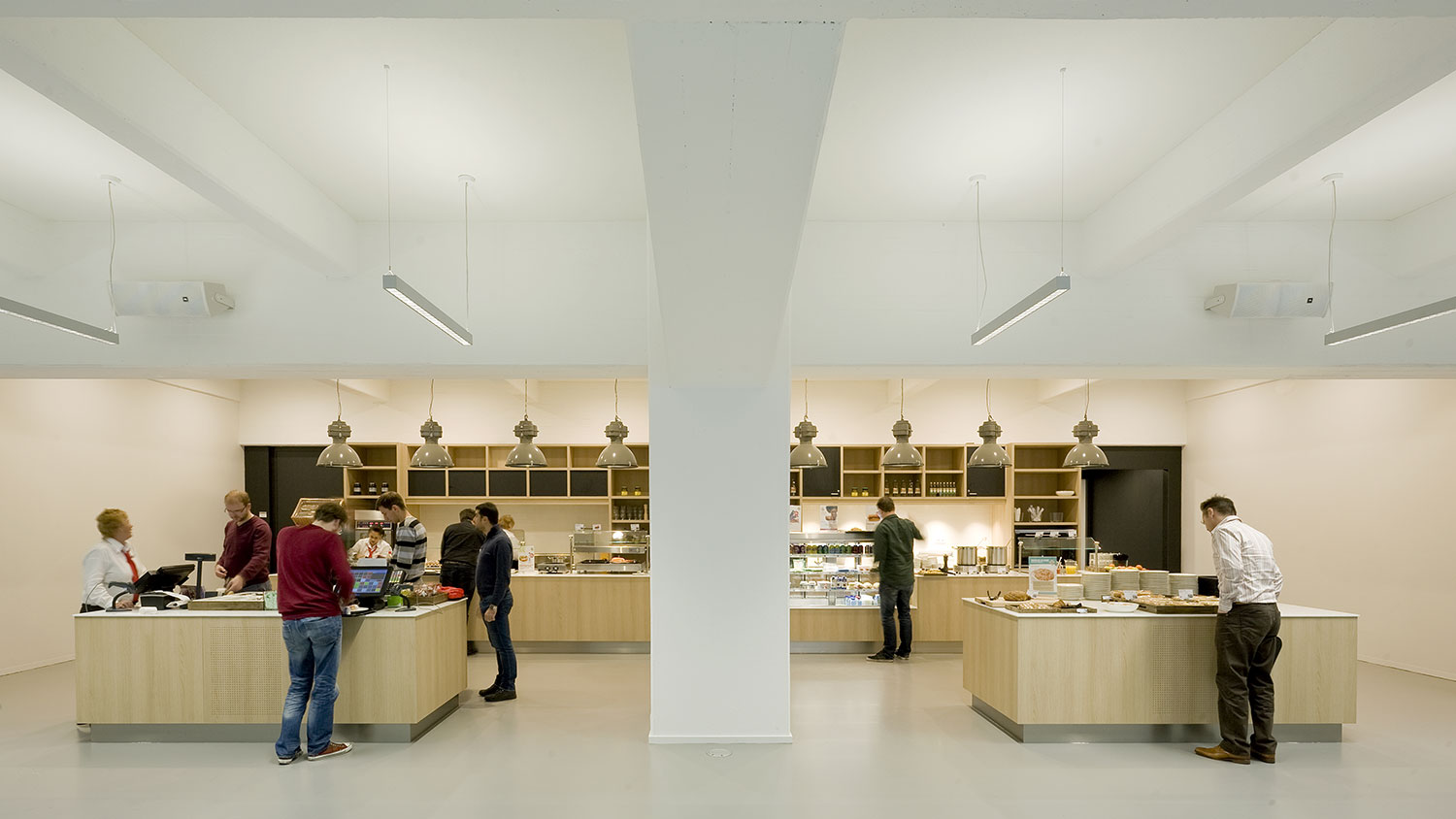
The transformation of this industrial building from a workshop to a high-quality office environment focused on preserving and restoring the original open nature, without losing sight of workplace comfort. The central atrium, which connects all floors, has been reopened and serves as the organisational and visual heart of the building. In order to turn the massive, seven metres high ground floor into a useful space, an in-between level was added. The existing ground floor can be used as a covered parking garage for more than 50 cars, while the new level still provides ample height to accommodate the central facilities of the office. This new floor is reached from the entrance via a large staircase that leads to the central atrium, where the company restaurant is located, with meeting facilities and workspaces situated around the facade.
Excellent Modern office design with great functionality
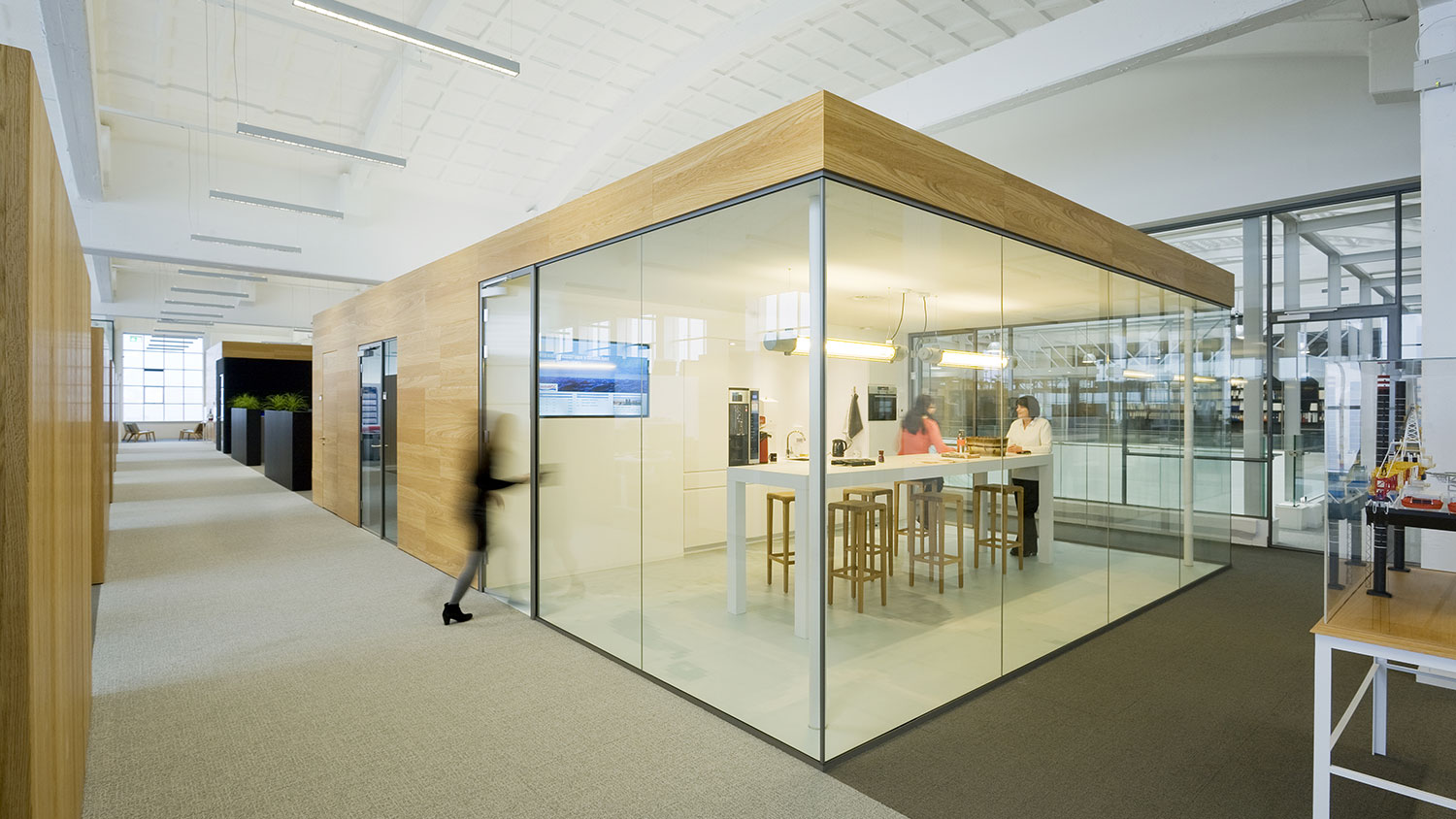
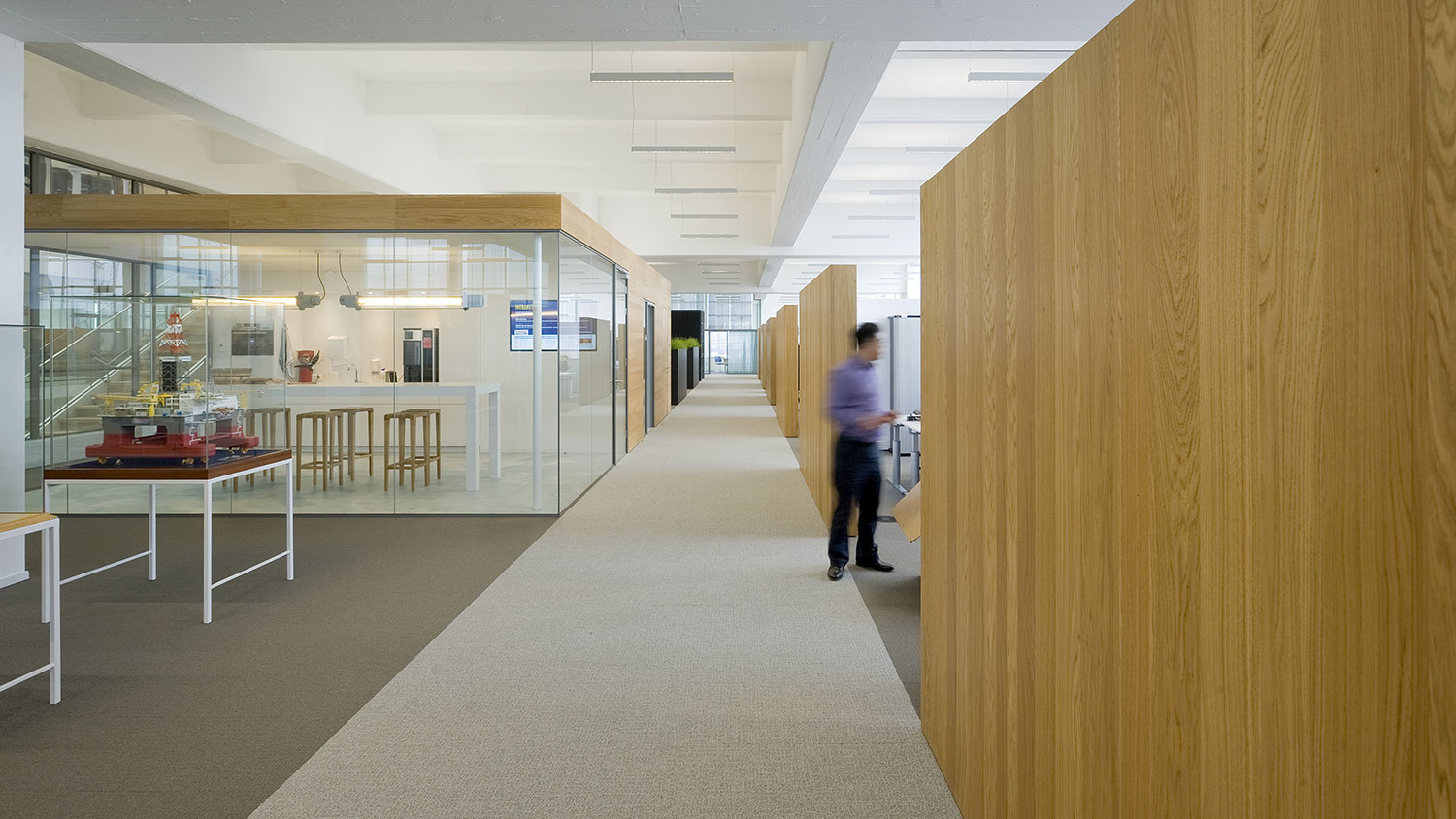
Two new open stairways in the atrium start at this level and connect the central facilities with the other two floors, where the majority of the workstations are located. These upper floors are separated from the atrium by a glass facade that prevents noise disturbance and in a crisis situation, the spread of fire. To showcase the industrial scale of the building as effectively as possible, these floors have been left as open as possible. Facilities such as pantries, meeting rooms, and focus areas are placed in freestanding volumes in the space, to minimise noise disturbance in the open work area. The workstations themselves, are separated from each other by movable acoustic partitions that are half the height of the ceiling. These walls provide comfort and tranquility in the workplace, contribute to flexibility as they are easily movable, but do not fully divide the space, thereby maintaining the open nature of the building.
Colour palette reflecting maritime history
The sober and functional character of the existing structure is also reflected in the colour and material use in the interior. A palette of white and grey tones, together with the abundance of concrete and glass, forms a neutral base. Wooden finishes, on the partitions for example, refer to the building’s former function, providing a warm accent in the otherwise cool-looking interior. The recurring colour accents in furniture, flooring, and wall finishes consist of steel-blue tones that match the maritime industrial character of GustoMSC. The restaurant is designed as a green courtyard where people can enjoy lunch while those hard at work have a pleasant view. A monochromatic palette of green in furniture and floor finishing contribute, together with a living tree, to this concept.
Well thought out building service systems
In addition to preserving the open nature of the building, efforts have been made to create a ‘clean’ appearance to showcase the defining structure of the building. To achieve this, the building service systems have been concealed as much as possible in new raised floors. These floors are arranged in a way that allows for outward views, as the original parapets were 1.5 metres high. Air supply and ventilation grilles, as well as data and electrical connection points, are incorporated into the floor and can be moved as desired thanks to the modular floor system. Lighting is integrated into the acoustic ceilings, which hang freely from the existing structure. This maximises the concrete’s thermal mass and keeps the existing concrete structure visible. The building’s facades already had new window frames with insulated glass. However, the parapets and roof were uninsulated and this has been rectified. The heating of the building makes use of the waste heat generated in the production process of the adjacent steel-hardening plant.
The integral approach and close collaboration between the various parties from design to completion has resulted in a sustainable, light, and comfortable office for GustoMSC in a unique maritime historical building.
Ensuring sustainable development while respecting cultural heritage
Sweco offers expertise in transformation architecture by blending historical preservation with modern design.
With a multidisciplinary team, Sweco can provide tailored solutions that balance functional requirements with the unique characteristics of each site, fostering a respectful relationship between existing structures and new developments.
Read more about Sweco’s offer within transformation architecture.