Europe’s largest centre of excellence for robotic surgery
ORSI Academy
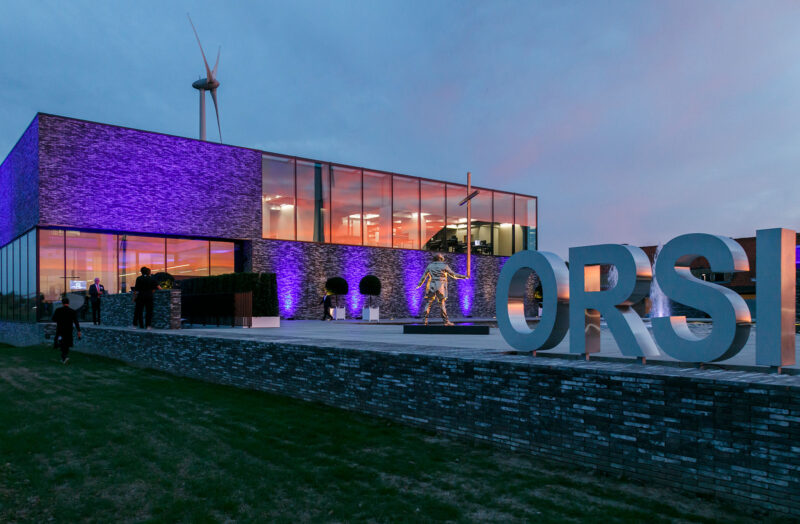
In Melle, Belgium, specialists and dedicated surgical teams worldwide are provided the practical training they need at ORSI Academy to master the intricacies of robotic surgery, offering both safer and more efficient surgical procedures.

Facts about the project
Client
ORSI vzw
Place
Melle, Belgium
Many advantages of robotic surgery
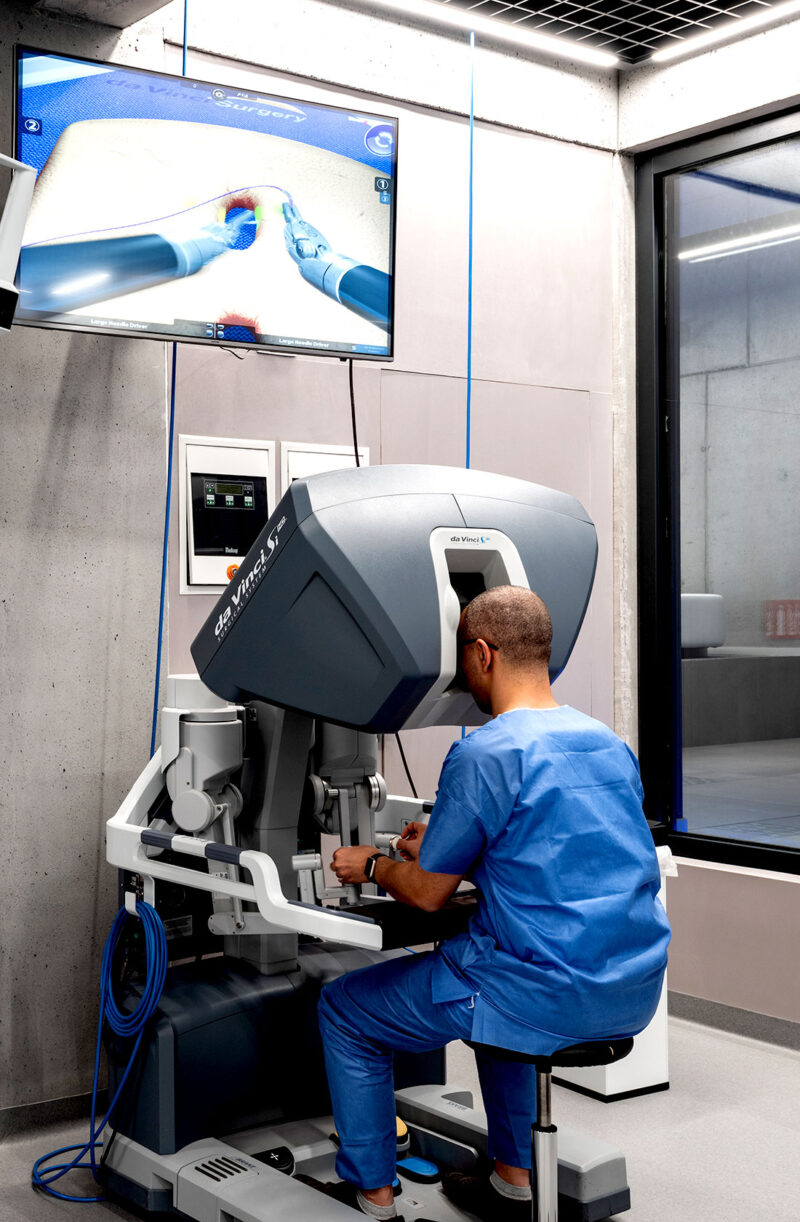
Robotic surgery is minimally invasive surgery wherein a laparoscopic procedure is performed using a surgical robot. The surgeon operates from a console, which gives them a three-dimensional view of the surgical area. Instruments in the patient’s body are managed by the surgical robot while the surgeon controls these instruments with virtual joystick movements.
Robotic surgery offers many benefits for the patient: fewer complications, shorter hospital stays, quicker returns to normal activities, and less scarring. It is currently used across multiple surgical fields, from urology and gynaecology to neurosurgery and spinal orthopaedics.
New training campus
Sweco’s architects have helped design an entirely new training campus consisting of four clusters of operating labs, meeting rooms, a restaurant, and an auditorium for 120 guests.
A key aspect of the design was to highlight knowledge and technical expertise, particularly the highly educated individuals working there. This was achieved by not only providing the correct tools (robots) but also creating a humane environment, away from an institutional feel.


Building with a harmonious environment
The goal was a setting that offers a hotel-like atmosphere with lounges and salon areas and a restaurant that serves as a haven from the daily stresses of life.
Another crucial aspect was creating an environment closely connected to nature, for the mental and physical well-being of all employees, sharply contrasting with the high-tech nature of robotics.
Situated along a busy motorway, the building features a clear distinction between large enclosed and open facade elements. Reception, waiting, and foyer areas are visible from the road, while the unique auditorium extending from these areas is entirely secluded. The more public rooms are positioned in parts of the building facing the green fields with large glass surfaces, flooded with daylight, and interacting with their surroundings.
Glass panels to create an open feel
Operating labs are located at the back of the campus, away from the motorway. Here, the focus is also on transparency, with glass panels creating a visual link between the various operating labs and clusters. Offices and meeting rooms on the upper floor have open views, placed away from the public circulation axis.
Pleasant outdoor environments have also been created, with terraces on both floors and a pond. The building is nearly energy-neutral thanks to its optimised exterior and solar panels.
Rapid development spurs plans for expansion
The best is yet to come. With new players in surgical robotics and the most advanced innovations accelerating robotic solutions and expanding availability, there are already plans to extend the training campus.
Background
In 2010, the OLV Robotic Surgery Institute (ORSI) was established as a spin-off from OLV Hospital in Aalst, with the support of the Flemish government, the European Fund for Regional Development (ERDF), the Vattikutti Foundation and OLV hospital. The faculty of veterinary medicine of the University of Ghent was engaged to provide the veterinary experience and the space needed to organise wet-lab trainings. This European centre for training in robotic surgery, in collaboration with the universities of Ghent and Leuven, offers specialists and dedicated surgical teams worldwide, the practical training necessary to master the intricacies of robotic surgery. The centre was officially recognised in 2013 by ERUS (European Robotic Urological Society) as a training centre for robotic surgery. In 2016, Orsi became a fully independent institution and was therefore rebranded to Orsi Academy. With 5 robots, it became the largest robotic training centre in the world.


